

main character, allegedly
how women’s voices get mislabeled, and why it’s time to claim your narrative

i’ve been known to refer to myself as the main character of my life.
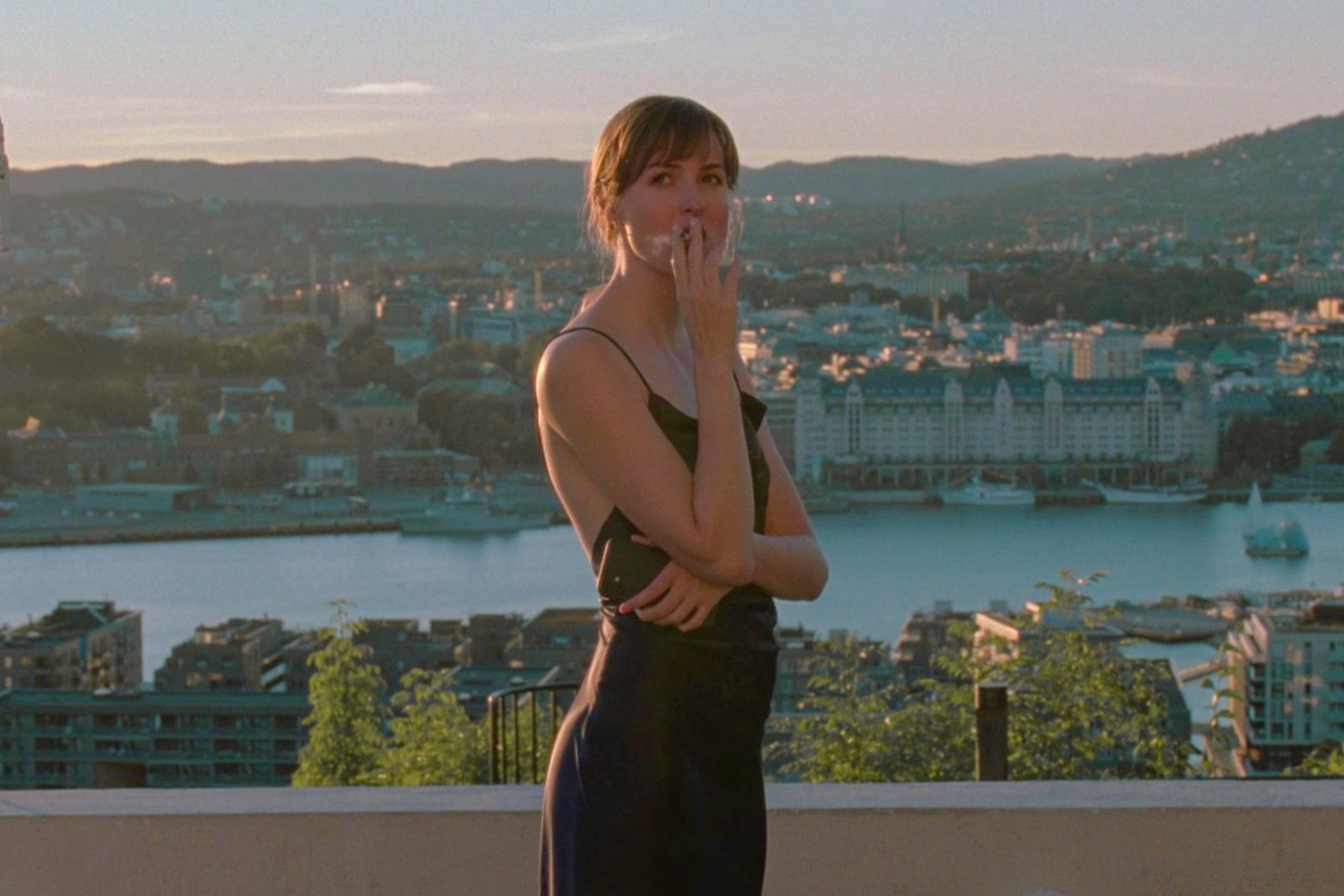
it started with a movie, as most things do for me. i kid you not, when i watched the worst person in the world a few years ago and heard the words, “i feel like a spectator in my own life, like i’m playing a supporting role,” i had to pause the film and just stare at the wall.
those words set off a flashback reel: every time i acted like a wallflower, every moment i laughed too loud at someone else’s joke just to be part of the story, every story i told that didn’t really include me. that film, that quote, was the reason i started noticing how often i chose to stay small. to stay quiet. like i was the side character helping someone else’s story move along. isn’t this supposed to be my life? why was i always waiting to be coaxed out, like a kitten under a couch? i scribbled that quote into my notes app, printed it out and taped it to my wall as a reminder to not disappear again. and to my surprise, it worked!
i mean, it took its sweet time. but it worked. it helped that i had just moved to canada and was living on my own. no safety net. no one to fall back on. all my close friends were either back home or off on their own adventures (okay fine, grad school, but that sounds boring, so i’m calling it adventures). the point is: i was alone. really alone. new country, new city, new version of me. and if this wasn’t the time to start acting like the main character, then honestly? that time was never going to come.
when i first got to toronto, i wasn’t a very social person. but i pushed myself anyway. i joined uni clubs, participated in classes, got a job. i’d go out after work, stay up too late, and sometimes crash at someone’s place when the subway stopped. none of it turned into real friendship, but it got me out of my shell. a little duckling testing her wings.
still, for all that effort, i didn’t really have anyone to go out with. not to the things i actually cared about. concerts, dance parties, weird art shows. so i figured, why not go alone? i had moved countries (!!!) on my own and i couldn’t take myself out to lunch?! i used to sneak off to movies alone back home. had i really forgotten how much i loved doing things on my own? unacceptable.
so i bought a ticket to a concert i’d been putting off. i was waiting for someone to join me, but then realized i didn’t need to. it just so happened to fall on my birthday (what are the chances?!) and honestly, i didn’t want anyone around anyway. so i bought the damn ticket. and splurged on VIP as a gift to myself, and spent my 21st birthday screaming my lungs out at one of my favourite artists’ concert! maisie peters wished me a happy birthday, gave me a handwritten note calling me a hero (so cute!), and even took a photo with me that i can forever brag about. how cool is that? i never would’ve had that story if i’d kept waiting.
i faked being the main character long enough that eventually, it just stuck. do you know when people say “do it scared”? well, i did it scared. and it actually worked. i started calling myself the main character before it became an aesthetic. i danced on my walks, took myself out for coffee, finished assignments in bookstores, read by the water just because i could. i even romanticized my subway rides, grocery runs, cooking, laundry — all the things i had to do anyway. not that it made me love them, but at least i crib less now. and doesn’t that count for something?
for a while, i wanted to document all of it. every time something made me feel a little more alive, i’d post it. dancing in my room, scream-singing at concerts, even the occasional crying video (grateful crying, mostly). all the things that made this life feel like mine. because somewhere along the way, i’d started to believe that you’re not really romanticizing your life unless you post about it. that you’re not really the main character until someone else sees it too.
but now? i’m not so sure.
turns out, people don’t care. about me, or my silly little videos. but they’ll comment anyway. i’ve gotten “why are you so dramatic on your stories?” and “you shouldn’t post dance videos” and “why not just record the artist instead of yourself? isn’t that who you went to the concert for?” and yeah, it got to me. made me second-guess things i knew i had good reasons for. maybe it was who said it or maybe it was how they said it and where. somewhere in all that noise, i had forgotten the point. that it’s my instagram account. my story. my concert. my tears. my camera. my life. and somehow i’m supposed to let people who barely know me tell me how to live it?!
the more comments i got like that, the more “main character” started to feel like an insult. and when it did become a trend, and people started posting about it, i didn’t want to join in. i’d already started posting less. but i watched. i saw all these lovely girls living their best main character lives. i’d open the comments thinking everyone would just want to be her. oh, how optimistic i was. what waited for me was something else. under almost every post were replies calling them self-obsessed. attention seekers. narcissistic, even. too much. too loud. too in love with the sound of their own voice.
this isn’t new. it’s just the latest version of what women have always had to deal with. we’ve always been called names for doing exactly what we need to do to survive, to feel good, to feel seen. we set a boundary, and they call us selfish. we choose ourselves, and they call us ungrateful. we post a hot photo, and they call us self-obsessed. we want to be seen, and they call us desperate. we admire our own reflection for a second too long, and they call us vain. we cry online, and they call us attention-seekers. we defend ourselves in the comments, and suddenly we’re narcissists. same tactics, different packaging. every time we dare to live like ourselves out loud, there’s backlash waiting.
we’ve heard it a hundred different ways. or, as taylor swift once put it:
“a man does something, it’s ‘strategic’; a woman does the same thing, it’s ‘calculated’. a man is allowed to ‘react’; a woman can only ‘over-react’. a man does something? ‘confident and bold.’ a woman does it the same way, and she’s ‘smug.’ a man ‘stands up’ for himself; a woman ‘throws a temper tantrum.’”
why does a woman get called selfish just for saying no? why is it narcissistic to talk about your own life, especially when that’s the only story you have? is it really attention-seeking, when all she wants is to be heard? why is she vain when all she’s trying to do is love herself in a world that teaches her the opposite? why does it make people so uncomfortable when a woman takes control of her own narrative? and why do these labels only ever stick to women? when was the last time you saw a man called self-obsessed for telling his story, or narcissistic for knowing his worth? the line between self-possession and self-obsession is blurry, but it only seems to matter when the person speaking is a woman.
i’ve been circling these questions for a while now. last week, i wrote about being seen through someone else’s eyes. it’s easy to romanticize that idea, especially in the right context, but there’s often another layer to this visibility. what it costs. what it’s called. and how quickly it gets turned against you.
narcissism is one of those words that cuts sharper than it needs to. it’s often flung around carelessly, lumped together with selfish, vain, dramatic, attention-seeking. all of them orbit the same idea: a woman who dares to make herself visible. a woman who doesn’t hide her hunger. we treat these words like synonyms, but they’re not. selfishness is more ordinary, more vulnerable. vanity can be introspective. attention-seeking is often just loneliness in disguise. and narcissism — real narcissism — is something else entirely.
narcissism is often the villain’s word in pop culture. a label reserved for women who want more. in the world of story, we rarely go easy on the women who take control instead of falling apart. think of amy dunne from gone girl. they don’t call her brilliant or strategic or brutally honest. they call her a narcissist. because she writes her own story and insists on being the center of it. because she disappears on purpose, curates her absence, stages her pain, and demands attention for it. because she punishes betrayal with precision and spectacle, not silence. she’s not soft, and she’s not sorry. and that makes her dangerous — to a culture that only accepts women when they’re wounded, not vengeful. sympathetic, not sharp. forgivable, but not unforgettable.
not every woman who takes up space gets cast as the villain. some just get told to shrink. look at midge maisel, the marvelous mrs. maisel herself — a woman who’s told no at every turn but still keeps choosing yes. yes to herself. yes to the mic. yes to a life not cushioned by marriage or her parents’ money. she loses everything and still refuses to disappear. she gets called too much and not enough in the same breath. when she takes the stage, it’s never just about the jokes. they call her difficult and too ambitious. they say she’s chasing attention, oversharing, taking up space that doesn’t belong to her. even if they don’t say it out loud, it’s in the way they dismiss her, punish her, shut the door. what is her offense, really? speaking her truth? saying out loud what others won’t? or simply refusing to fade into the background? the real issue isn’t the words themselves. it’s that she wants to be the main character in her own story, not someone else’s. the labels aren’t so much descriptors as they are penalties for stepping into the light and daring to stay there.
i keep thinking about taylor swift. she’s blamed for “blocking” others from the charts, mocked for writing about her relationships, and labelled greedy for reclaiming her masters. she’s called narcissistic for making herself the subject of her art again and again. but who else is it supposed to be about? it’s the authorship that bothers them. the fact that she dares to narrate her own story and refuses to apologize for it.
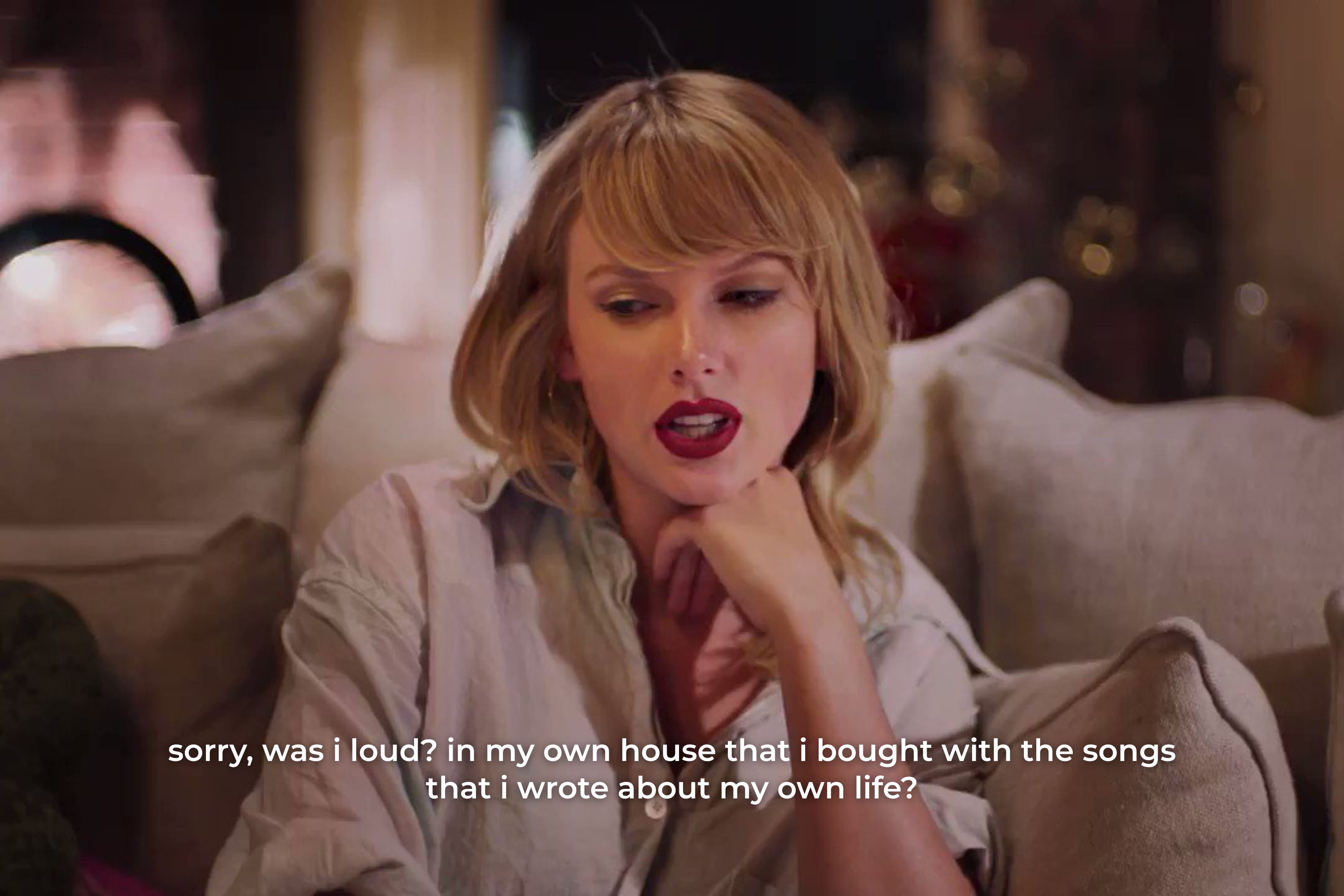
when anti-hero came out, people picked apart the lyrics, circled lines and held them up as proof that she admits to entitlement. to self-importance. but what they missed is that when she sings “i’m the problem,” it isn’t an admission of guilt. it’s an internalized accusation. it’s a reflection of what’s been written on her over and over again until she carved it into the chorus. she’s returned to this in so many songs, but nothing new captures it best. she mourns how fast admiration curdles into resentment. “they tell you while you're young "girls, go out and have your fun" / then they hunt and slay the ones who actually do it”
the pattern isn’t subtle. it repeats over and over, everywhere you look — especially in the women being labelled “too much” right now. chappell roan was told to be grateful, to remember her place, when she snapped at a photographer who disrespected her on a red carpet. rachel zegler was called naive and entitled for speaking up about palestine, and for refusing to take the post down even when disney asked her to. their small, instinctive, human moments triggered instant backlash. the refusal to perform likability — to be palatable — makes them targets.
when a woman names what the world made her into, she’s called ungrateful. dramatic. manipulative. calculated. narcissist. but still, women keep saying the same thing in different ways: i want more. i want all of it. i want to be chosen and adored and forgiven. sometimes i want to be the problem. sometimes i want to be the point.
so much of pop psychology misses the messiness of it all. we sling these words like swords, calling someone a narcissist when we feel invisible around them, calling ourselves selfish when we finally stop collapsing inward.
boundaries have become the new battleground. wanting to protect your time, your space, your peace is somehow a betrayal. as if saying no means you love people less, instead of meaning you’ve learned how to love yourself better. we talk about boundaries like they’re walls when really they’re doors. and still, when women set them, especially clearly and unapologetically, it’s read as coldness or ego.
it’s wild how self-love can be an aesthetic but not always welcomed in practice. the same people who repost “protect your energy” will look at you sideways when you actually do. maybe that’s why so many of us hesitate. because choosing yourself often sounds like selfishness spoken in someone else’s voice. we’ve been taught that kindness means silence, that shrinking is somehow noble. but the truth is that language is slippery, and most people aren’t diagnosable. they’re just tired. or hurt. or 23 and trying. sometimes strong, and sometimes both. and when it’s a woman choosing herself, especially out loud, it reads differently. people say she’s making everything about her. maybe she is. maybe that’s the point. maybe saying no is how she stays whole.
the internet has made all of us into curated personas. we diagnose each other like we’re taking quizzes. red flag, narcissist, gaslighter, manipulative, avoidant. it’s comforting to name the pain, to put someone in a box and call it closure. it makes things feel neat. resolved. but most things aren’t. and most people aren’t. and the better questions aren’t about labels. not “am i selfish?” or “am i narcissistic?” but “did i care?” “did i try?” “did i take up space without stealing it?” “did i love myself enough to stop when i needed to?” these questions are harder. they don’t give easy answers. they ask us to sit with discomfort, to look at the whole picture.
what we’re really asking for is space to exist without performance. to be seen in our full context. to feel like our joy and our pain both matter.
because claiming the role of the main character becomes the only way to remember: this is your life. and you get to live it on your own terms.
🎧 this week’s soundtrack
the song that lives inside these words
‘i’m just having fun on the stage in my heels” says everything. chappell is theatrical, playful, emotional, too much in all the best ways. she never tries to be relatable, or shrink herself down for the world. she’s just being real. and people call that dramatic, or self-obsessed, or attention-seeking. but she’s not asking to be liked. she’s just letting herself exist loudly.
thank you for being here.
whether you meant to arrive or just wandered in through some strange hallway of the internet — i’m grateful you made it to my little corner. it’s a strange thing, to share thoughts into the void and have someone, somehow, receive them. i don’t take it lightly.
typing…still runs on feelings, pop culture spirals, and the generosity of those who believe that overthinking is, actually, an art form worth supporting. simply knowing you’re here, reading what i wrote, feels like its own kind of magic.
if this made you feel something (or at least tilt your head and go hmm), you might consider one of these small joys:
🥐 send a croissant my way — a small, one-time gesture to help keep this soft, chaotic little lighthouse lit.
💌 become a paid subscriber — a way to support the spirals regularly, and receive the occasional extra musing or love letter in return.
no pressure. truly. but if you’ve ever read something here and thought “she should spiral for a living”… then know this: your presence alone brings that dream a little closer to reality. and that’s no small thing.
with unreasonable amounts of affection,
anshika ✨

It’s your life
No one else’s
Don’t hurt others
Mind your business
And watch how you live it best
This is the first post I’ve read of yours and I’m in love coz this thing got me smiling, nodding along and wanting to scream: BROADCAST THIS THING FOR THE WORLD